
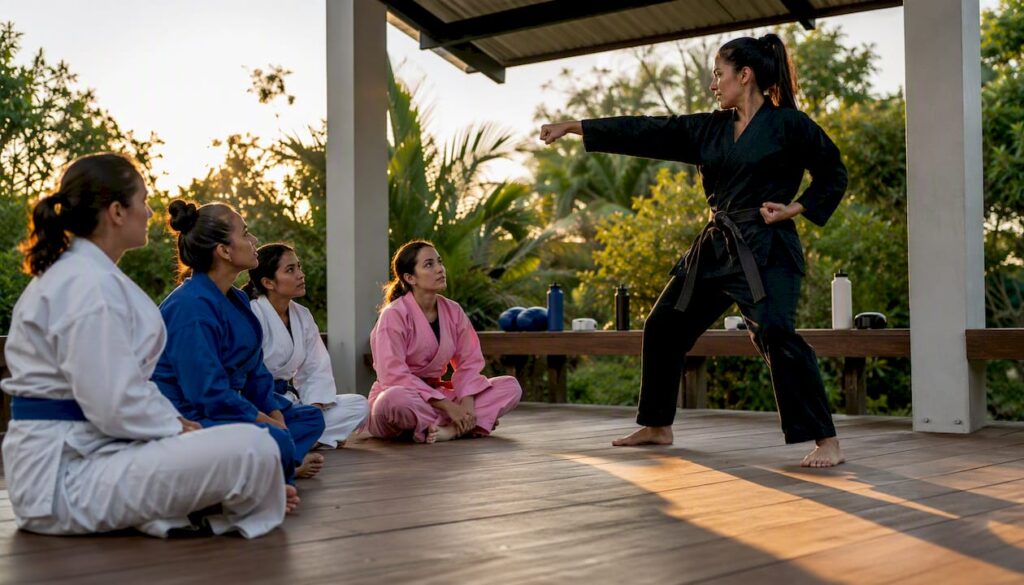
Launch a women-focused program this week by doing three things: add one women-only class to your schedule, create a free or low-cost introductory offer, and reach out to five local women’s organizations. That single combination, done consistently, is the highest-leverage first move any studio owner can make.
This week’s quick-start actions:
- Block a Tuesday or Thursday evening slot (6:30–7:30 PM) for a women-only beginner class.
- Create a “First Class Free” or $29 intro-week offer and post it to your Google Business Profile and Instagram.
- Email three local partners (a yoga studio, a salon, and a women’s networking group) with a short co-promotion pitch.
Operational must-haves before day one:
- A female instructor or trained female assistant available for the first session
- A written harassment and boundary policy posted visibly in the facility
- Digital waivers ready to sign on arrival
- A clean, private changing area with adequate lighting
- A simple welcome email queued to send automatically after signup
Key Takeaways
| Point | Details |
|---|---|
| Launch with one class | Start with one women-only session per week; add more when average attendance exceeds 10 students. |
| Retention starts at onboarding | A mapped 90-day journey with welcome calls and check-ins is the highest-leverage retention investment. |
| Community messaging converts | Female-targeted ads showing women training and emphasizing community outperform generic creatives. |
| Track five core KPIs | Monitor trial-to-enroll, 90-day retention, attendance, referral rate, and LTV from week one. |
| Dojotrack automates the admin | Dojotrack’s free core layer covers scheduling, waivers, and attendance; paid tiers add AI retention alerts and SMS automations. |
Table of Contents
- Why targeting female students pays off for your studio
- How to design a women-focused program that actually retains students
- Pricing, packages, and a friction-free enrollment flow
- Marketing and outreach that brings female leads to your door
- Retention and community-building that keeps women renewing
- Operational changes and staff training your studio needs
- KPIs and reporting: what to track and when to act
- How Dojotrack supports your women-focused program from day one
- Your 30/60/90-day launch checklist
- Why this playbook works, from DojoTrack’s perspective
- Dojotrack makes launching your women’s program faster
- Sources
- FAQ
Why targeting female students pays off for your studio
Women represent a large, underserved segment of the martial arts market, and studios that build programs specifically for them see measurable business results. Women-only classes can raise retention by 15–20% compared to mixed classes, which directly reduces the churn that quietly drains studio revenue. One women-and-girls-focused program grew from $7,000 to $31,000 in monthly revenue in nine months by combining premium pricing with a structured enrollment path and a renewal program.
Three sample metrics to track from the start:
- Trial-to-enroll rate: Aim for 50–60% of free or intro-week participants converting to a paid membership.
- 90-day retention: Target 70% of new female members still active at the 90-day mark.
- Lifetime value (LTV): Track average monthly revenue per female member multiplied by average membership length.
Women who stay in martial arts programs typically prioritize safety, scheduling flexibility, visible female leadership, and a welcoming onboarding experience. Research on women-friendly academies found that the studios where women stay consistently show multiple female students across belt levels, female instructors or assistants, intentional onboarding, and active intervention against harassment. These are not soft culture points; they are retention drivers with direct revenue impact.
Pro Tip: Before you invest in ads, survey your current female students with three questions: What almost stopped you from joining? What keeps you coming back? What would you tell a friend? Their answers will sharpen your messaging faster than any marketing template.
How to design a women-focused program that actually retains students
Program types to offer
Start with a women-only beginner class (1–2 times per week), then add a progressive women’s track as enrollment grows. Mixed advanced classes can remain open to all students. Commit at least 6–12 months and aim for 8–15 interested women before launching to build sustainable momentum.
Sample 8-week beginner curriculum
- Weeks 1–2: Stance, movement, and basic strikes; class norms and partner expectations
- Weeks 3–4: Clinch defense, wrist releases, and ground awareness
- Weeks 5–6: Escapes, guard basics, and positional control
- Weeks 7–8: Scenario-based drilling and belt/progress review
Instructor checklist
- Use trauma-informed language: ask before demonstrating contact, never assume comfort level
- Assign designated training partners for a new student’s first two sessions
- Check in verbally with new students at the midpoint and end of each class
- Model boundary-setting explicitly during technique demonstrations
Safety and harassment policy essentials
- Post a written policy at the entrance and include it in the welcome email
- Define a clear reporting flow (student reports to instructor, instructor reports to owner)
- Train all instructors to intervene immediately on boundary violations, not after class
- Review the policy with new students during their first session
Offering a women-only option does not stigmatize participants. Frame it as a preference, not a limitation. Students who prefer mixed classes can always move there; having the option builds trust with women who are new to contact sports.
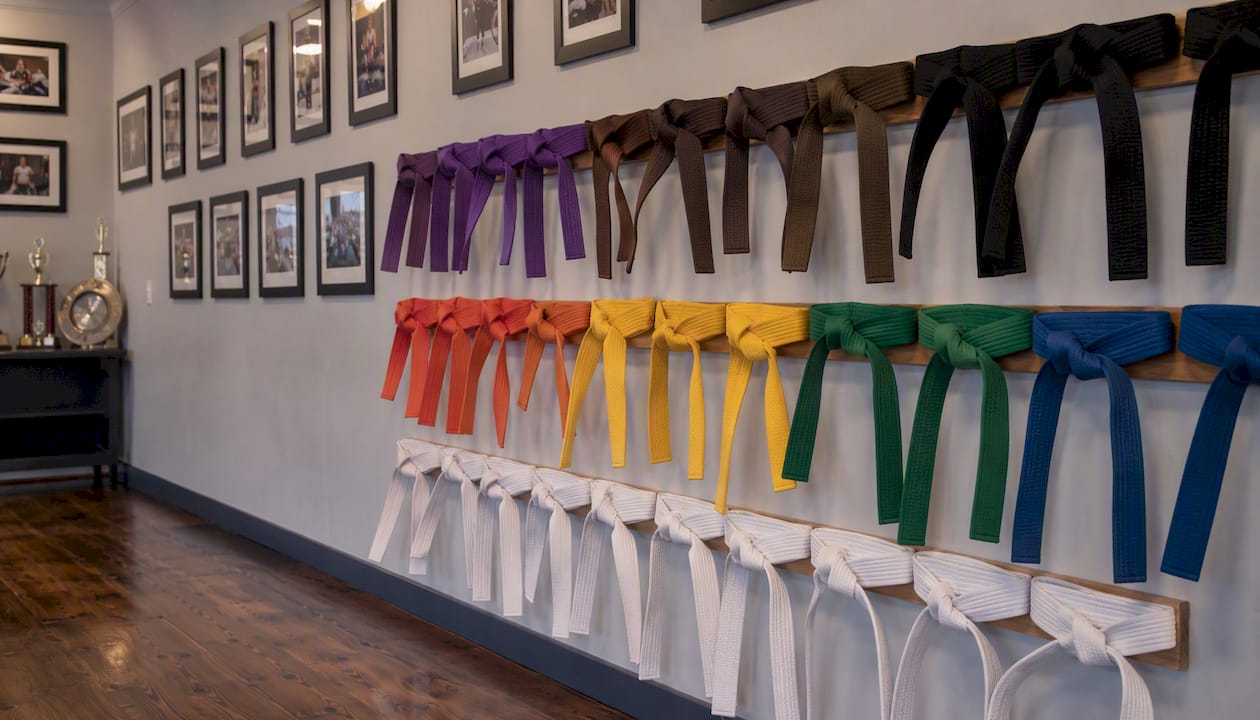
Pro Tip: Visibility matters. Post photos of your female students at different belt levels on your studio walls and social media. Research shows that seeing women at advanced levels is one of the strongest signals a new female student uses to decide whether to stay.
Pricing, packages, and a friction-free enrollment flow
Pricing templates
Women-only programming supports premium pricing because it delivers a differentiated experience. A structured enrollment path from social audience to signup is what converts interest into revenue.
Recommended trial offer
A free first class works well for cold audiences who have never tried martial arts. A paid 2-week intro course ($29–$49) works better for warm leads who already follow you on social media, because it creates commitment and filters for serious prospects.
Enrollment flow on day one
- Send a pre-arrival welcome email with what to wear, where to park, and what to expect.
- Collect a digital waiver before or at the door (never after class).
- Walk the student through two or three membership options, not a full menu.
- Set up recurring billing immediately; do not let a new student leave without a payment method on file.
- Schedule their next two classes before they leave the building.
Marketing and outreach that brings female leads to your door
The messaging that converts women is built around community, confidence, and skill-building. Fear-based framing (“protect yourself from attackers”) can attract a short burst of interest but produces lower-quality leads and higher churn. Community and growth framing (“train with women who get it”) builds the kind of enrollment that renews.
Channel mix for local studios:
- Instagram and Facebook: Post video of women training, belt promotions, and instructor spotlights 3–4 times per week.
- Meta ads: Run separate ad sets targeting women ages 25–45 with community and empowerment messaging; female-targeted creative showing women training outperforms generic ads for this audience.
- Google Business Profile: Update your description to mention women’s classes and post your intro offer weekly.
- Local partner outreach: Yoga studios, salons, women’s networking groups, and corporate HR departments are your highest-conversion referral sources.
Sample Facebook/Instagram ad copy:
“Train with women who get it. Our women-only classes are beginner-friendly, instructor-led, and built around your schedule. First class is free. [Link in bio]”
Email nurture sequence for trial leads
- Day 0: Welcome email with class schedule and what to expect
- Day 3: “How was your first class?” check-in with a direct reply option
- Day 7: Membership options with a limited-time offer
- Day 14: Final nudge with a student story or testimonial
Partner outreach template: Email local yoga studios and women’s organizations with a simple co-promotion offer: you promote their services to your students, they share your intro offer with theirs. No cost, no contract.
Pro Tip: Ask every new female member how she heard about you and log it. After 60 days, you’ll know which channel is actually driving enrollment, not which one feels most active.
Retention and community-building that keeps women renewing
90-day onboarding checklist
- Day 1: Welcome call or text from the instructor within 24 hours of first class
- Week 2: Assign a training partner or “buddy” from the existing student community
- Week 4: Progress check-in (verbal or short survey)
- Week 8: Invite to an upcoming community event or workshop
- Day 90: Renewal conversation with a loyalty incentive
A mapped 90-day student journey, including welcome calls and scheduled check-ins, significantly improves trial-to-enroll conversion and early retention for women-focused programs.
Community events that deepen ties:
- Monthly “bring a friend” nights with a free guest pass
- Quarterly women’s self-defense workshops (open to the public, paid admission)
- Annual belt promotion ceremony with a reception afterward
Retention incentives that work:
- Referral credits ($20–$30 off next month’s dues per referred member who enrolls)
- Leadership track: invite high-retention students to assist in beginner classes
- Continuing education: subsidize women who pursue instructor certifications
If a student drops below two classes in a month, that is your trigger for a personal outreach.
Operational changes and staff training your studio needs
Staff training checklist
- Train all instructors on trauma-informed communication before the program launches
- Establish a clear protocol for partner selection in women’s classes (instructor assigns, not self-selected, for the first month)
- Define and practice the harassment reporting flow in a staff meeting
Scheduling recommendations
Offer women’s classes on Tuesday and Thursday evenings (6:30–8:00 PM) and Saturday mornings (9:00–10:30 AM). These slots suit working parents and avoid the peak men’s class times that can make shared mat space feel crowded. For building your first class schedule, start at 1–2 sessions per week and add a third when average attendance exceeds 10 students per class.
Facility checklist
- Private changing area with a lock, adequate lighting, and a mirror
- Well-lit parking lot or a clear note about the nearest safe parking
- Clear signage directing new students from the entrance to the mat
- Printed or digital copy of the harassment policy at the entrance
Document your harassment and boundary policies in writing, share them with every staff member before launch, and include them in the student welcome packet. Verbal-only policies do not hold up when incidents occur.
KPIs and reporting: what to track and when to act
Track these five metrics weekly for the first 90 days, then monthly after that.
Reporting cadence:
- Weekly: Review attendance and flag any student who missed two or more consecutive classes.
- Monthly: Pull trial-to-enroll conversion, retention rate, and referral count.
- Quarterly: Calculate LTV per female member and compare to your overall student average.
How Dojotrack supports your women-focused program from day one
Running a women-focused program manually means tracking attendance on spreadsheets, chasing billing, and hoping you remember to follow up with a student who missed last week. Dojotrack removes that friction entirely.
Features that directly support a women’s program:
- Automated onboarding sequences: Send welcome emails and check-in messages without lifting a finger after setup.
- Attendance tracking and at-risk alerts: Dojotrack’s AI flags students whose attendance drops, so you can reach out before they quit.
- Digital waivers: Collect signed waivers before or at the door, stored automatically.
- Belt tracking and automated promotions: Track every student’s progress and trigger promotion notifications on schedule.
- SMS and email automations: Run your entire nurture sequence and renewal reminders automatically.
- Student mobile app: Students track their own belt progress, view schedules, and receive push notifications between classes.
- Scheduling and event management: Manage women’s class slots and event registration in one place.
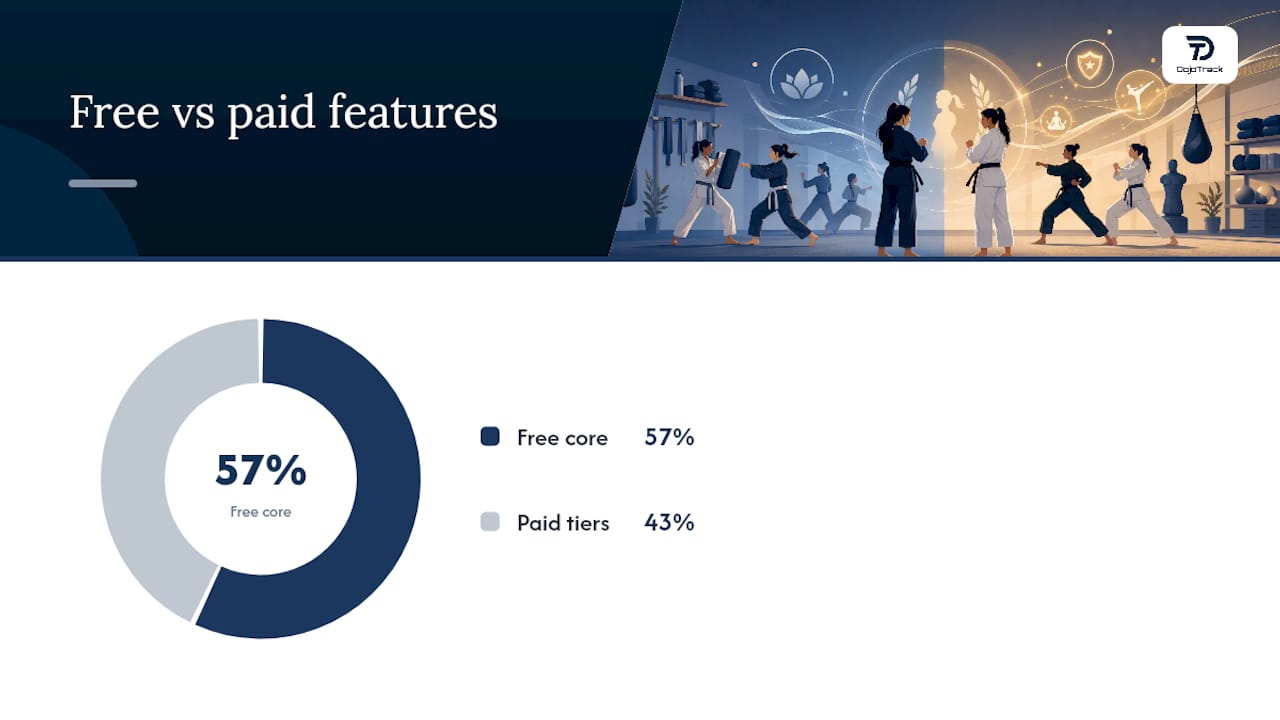
DojoTrack was built by Jared Reed, a martial arts veteran who ran schools himself and experienced firsthand how manual admin work pulls instructors off the mat. The platform’s free core layer, which includes membership management, attendance tracking, scheduling, and digital waivers, gives you everything you need to launch a women’s program without upfront software cost. As your program grows, paid tiers unlock AI-driven retention alerts, SMS automations, and advanced analytics that handle the follow-up work your team would otherwise do by hand.
For a deeper look at how purpose-built software compares to generic tools, the martial arts CRM selection guide walks through exactly what to evaluate.
Your 30/60/90-day launch checklist
Days 1–30: Foundation
- Assign a female instructor or assistant to lead women’s classes.
- Write and post your harassment and boundary policy.
- Add one women-only class to the schedule (Tuesday or Thursday evening).
- Create your intro offer and post it on Instagram, Facebook, and Google Business Profile.
- Set up digital waivers and recurring billing in your studio software.
- Email five local partner organizations with a co-promotion pitch.
Estimated time: 8–12 hours. Estimated cost: $0–$200 for collateral and ads.
Days 31–60: Enrollment and marketing
- Launch a Meta ad campaign targeting women ages 25–45 with community-focused creative.
- Run your first “bring a friend” night.
- Review trial-to-enroll conversion and adjust your follow-up sequence if below 40%.
- Add custom branded apparel for women’s program participants to build community identity.
Estimated time: 6–8 hours/month. Estimated cost: $150–$400/month for ads and materials.
Days 61–90: Retention and scaling
- Conduct 90-day check-ins with every student who enrolled in month one.
- Host a quarterly women’s workshop open to the public.
- Enable automated renewal reminders and at-risk alerts in your studio software.
- Evaluate attendance data and add a second weekly class if average attendance exceeds 10.
Estimated time: 4–6 hours/month ongoing. Estimated cost: $50–$150/month.
Pro Tip: Do not add a second class time until your first one averages at least 10 students. Scaling too fast dilutes community and makes both sessions feel empty.
Pro Tip: Set a calendar reminder at day 45 to review your referral rate. If it’s below one referral per 10 members, introduce a formal referral credit before month two ends.
Why this playbook works, from DojoTrack’s perspective
The studios that succeed with women’s programs are not the ones with the biggest ad budgets. They are the ones that treat female enrollment as a systems problem, not a marketing problem. The onboarding sequence, the instructor training, the harassment policy, the automated follow-up: each piece removes a reason for a woman to leave before she has a chance to fall in love with the sport. When those systems run automatically, the owner can stay on the mat instead of chasing paperwork.
The revenue case is real. A program that grows from a handful of students to a full women’s track, with premium pricing and a structured renewal path, can meaningfully shift a studio’s monthly revenue, as the case study above demonstrates. The operational investment to get there is measured in hours, not months of full-time work, when the right tools are in place.
Dojotrack makes launching your women’s program faster
Dojotrack gives you the free core tools to launch a women’s program today: scheduling, digital waivers, attendance tracking, and basic automations, with no upfront cost. When you’re ready to scale, paid tiers add AI-driven retention alerts, SMS sequences, belt tracking, and a student mobile app that keeps your female members engaged between classes.
Studios that use purpose-built martial arts management software spend less time on admin and more time building the community that retains students. Start free at DojoTrack and run your first women’s class intake this week.
Sources
- Research provides indicators of Women-Friendly BJJ academies
- Women-Only BJJ Classes UK: Complete Setup Guide (2026)
- Case Study: $31K a Month in 3 Days a Week
- How to Build a Women’s Self-Defense Program That Enrolls | Veuze Media Blog
- Boxing Gym Marketing: Fill Classes and Build Community 2026 | Optimized Growth
FAQ
How many female students do you need before launching a women-only class?
Aim for 8–15 interested women before committing to a regular schedule, or run a 4-week trial class to gauge demand before making it permanent.
What is the best pricing for a women-only martial arts program?
A beginner women-only membership in the $99–$129/month range, paired with a $29–$49 intro offer, balances accessibility with premium positioning and supports strong trial-to-enroll conversion.
How does Dojotrack help retain female students specifically?
Dojotrack’s AI-driven retention alerts flag students whose attendance drops, and its automated SMS and email sequences handle onboarding check-ins and renewal reminders without manual follow-up from the instructor.
What marketing message converts best for female martial arts enrollment?
Community and empowerment framing (“train with women who get it”) consistently outperforms fear-based messaging; separate Meta ad sets targeting women 25–45 with creative showing women training perform best.
How long does it take to see results from a women’s program?
Most studios see meaningful enrollment growth within 30–60 days of launching a targeted offer and ad campaign; 90-day retention and revenue trends become clear by the end of the third month.
Recommended
- Stop Losing Students: 5 Steps How to Boost Retention and Revenue (Easy Guide for Martial Arts Schools) | DojoTrack
- Best Martial Arts Studio Software for Small Schools: Features, Benefits, and AI Advantages | DojoTrack
- How to Create Your First Martial Arts Class Schedule
- What to Look for in Martial Arts School Software (2026 Buyer’s Guide) – DojoTrack