

TL;DR:
- An AI retention system monitors student behavior and attendance to identify dropout risks early. It provides automated alerts and prompts for timely, personalized outreach to reduce cancellations. Starting with simple monitoring and gradually automating helps small studios improve retention effectively.
An AI retention system for a small martial arts studio is a technology platform that continuously monitors student attendance and behavior to identify dropout risks early and trigger personalized interventions before a student quits. The industry term for this approach is “predictive retention,” and it applies directly to small dojos, MMA gyms, and Taekwondo academies where every student lost hits the bottom line hard. AI-powered retention can reduce churn by up to 36% and improve student satisfaction by 33%. For a studio running on tight margins, those numbers represent real revenue and real relationships saved. If you have ever watched a promising student disappear after three months without warning, this is the system built to stop that from happening.
What is an AI retention system for a small studio?
An AI retention system for a small studio is software that replaces manual attendance reviews with a continuous, automated monitoring loop. Instead of you scanning spreadsheets every Friday to guess who might be drifting, the system watches every class check-in, flags behavioral changes, and alerts you when a student needs attention. Retention becomes a continuous loop with AI rather than a calendar-based review. That shift matters because dropout decisions rarely announce themselves. A student stops showing up gradually, and by the time you notice, they have already mentally checked out.
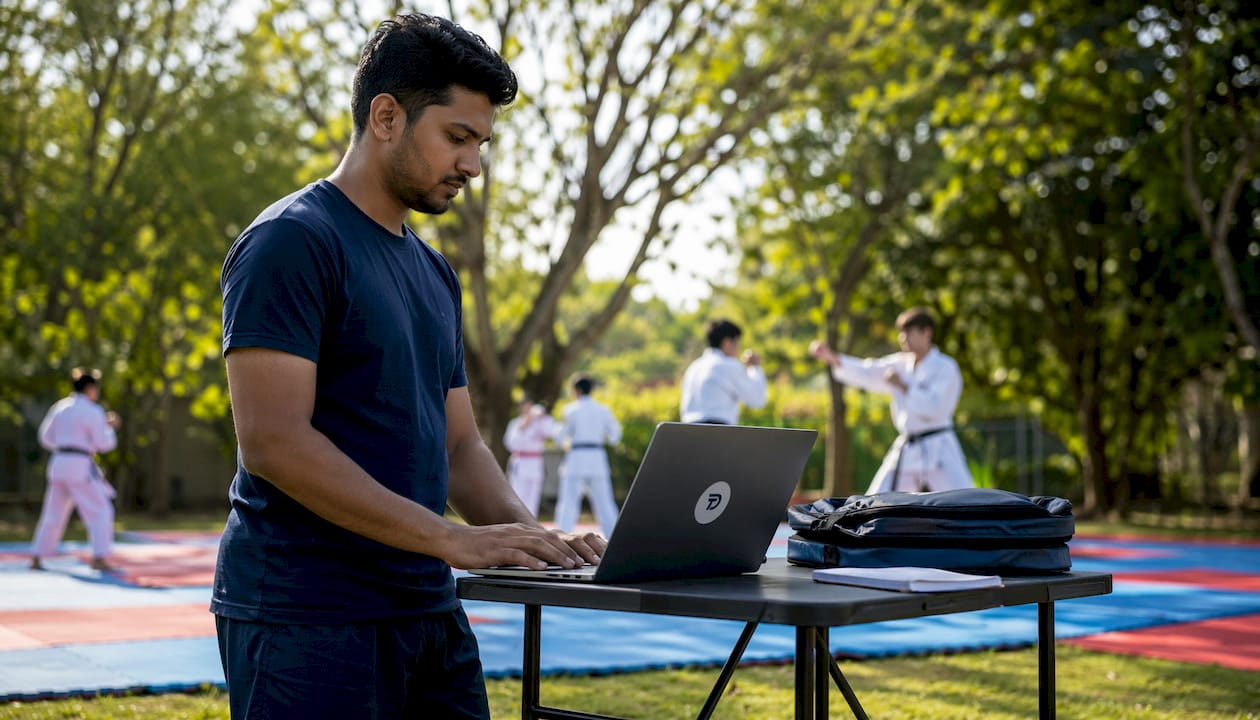
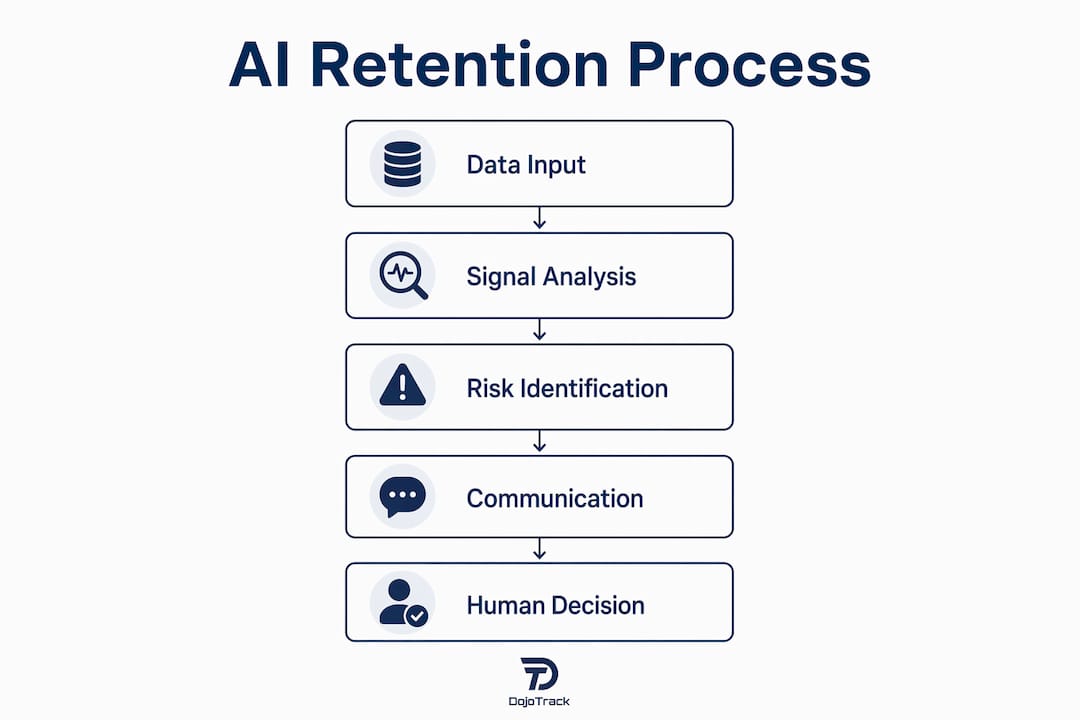
The system works by pulling data from your booking or attendance platform and running it through predictive models. Those models look for patterns tied to cancellation risk: declining visit frequency, missed milestone classes, reduced participation in events. The AI then surfaces a prioritized list of students who need outreach, along with suggested next steps. You make the call. The AI does the watching.
A complete retention tech stack covers four core layers: booking data, behavioral signals, a communications layer, and social community. Each layer feeds the next. Booking data tells you who showed up. Behavioral signals tell you who is disengaging. The communications layer delivers the right message at the right time. Community ties keep students connected even when life gets busy.
How does AI track attendance and spot at-risk students?
Attendance monitoring is the first and most reliable signal in any small studio retention system. When a student’s visit frequency drops by 30% or more, that threshold triggers a retention alert in well-designed AI systems. A 30% drop is not a missed class. It is a pattern, and patterns predict behavior.
Beyond raw attendance counts, AI retention tools track a wider set of behavioral signals:
- Visit frequency trends over 30, 60, and 90-day windows
- Class type changes, such as a student switching from sparring to beginner sessions
- Event participation, including belt tests, tournaments, and open mats
- Communication response rates, like whether a student opens your SMS messages
- Milestone proximity, such as a student nearing a belt promotion who has not tested
Each signal on its own is weak. Combined, they give the AI a clear picture of engagement health. The system translates that picture into a ranked alert list, so you spend your time acting on the highest-risk students instead of hunting for them.
Pro Tip: Connect your AI retention tool to your class scheduling platform from day one. Without live attendance data flowing in, the system is guessing. With it, the alerts become accurate enough to act on immediately.
Dojotrack handles this integration natively. Its attendance tracking tools feed directly into its AI analytics layer, so risk flags appear without any manual data entry on your part.
Why does social connection reduce cancellations in small studios?
Social ties are the most underrated retention tool in martial arts. Students who feel connected to classmates and instructors cancel memberships at a dramatically lower rate. Socially connected members show a 60% reduction in cancellation risk compared to isolated members. That figure alone should change how you think about community building.
AI retention systems amplify social connection by surfacing opportunities you would otherwise miss. The system can identify students who train at the same times but have never been formally introduced. It can flag when a newer student has not attended a group event and prompt you to send a personal invitation. It can remind you to celebrate a student’s anniversary or belt promotion publicly, which reinforces their sense of belonging.
Practical community-building moves that AI can support:
- Automated milestone messages sent when a student hits their 50th class or earns a new belt
- Group event reminders targeted at students who have not attended a social session recently
- Peer connection prompts that suggest pairing a newer student with a more experienced training partner
- Re-engagement sequences triggered when a student misses two consecutive weeks
The key insight is that AI does not replace the human warmth of a martial arts community. It makes sure that warmth reaches every student, not just the ones you happen to remember to check on. Small studios have a natural advantage here because instructors know their students personally. AI retention strategies give you the data to act on that knowledge consistently.
Best practices for implementing AI retention in your studio
The biggest mistake studio owners make with AI retention is trying to automate everything at once. Start with a small set of retention moments and build from there. Overbuilding early creates complexity that breaks down and gets abandoned.
A phased approach works best:
- Visibility first. Set up attendance monitoring and let the system run for 30 days without acting on every alert. Learn what normal looks like for your studio before you start intervening.
- Manual intervention. When the AI flags a student, you make a personal call or send a direct message. Do not automate outreach yet. Learn what works in your voice and your community.
- Selective automation. Once you know which messages get responses, automate those specific touchpoints. A text after a two-week absence. A congratulations message after a belt test. Keep it targeted.
- Review and refine. Check your retention rate monthly. Adjust alert thresholds and message templates based on what is actually working.
AI surfaces risk signals and suggests actions, but humans retain final decision-making. That division of labor is the point. The AI watches hundreds of data points simultaneously. You bring judgment, relationship history, and the ability to read a student’s situation in ways no algorithm can.
Pro Tip: Do not automate a broken process. If your current follow-up messages get no response, automating them at scale just sends more ignored messages faster. Fix the message first, then automate.
Common pitfalls to avoid:
- Ignoring the first-month window, which is the highest-risk period for new students
- Setting alert thresholds too low, which floods you with false alarms
- Skipping human review and letting automated messages handle every at-risk student
- Treating AI retention as a one-time setup rather than an ongoing practice
For guidance on AI adoption in martial arts, the principle is consistent: start where the pain is biggest and build incrementally.
How does an AI retention system integrate with your studio operations?
Integration is what separates a useful AI retention tool from an expensive dashboard nobody checks. The system needs to connect directly to the platforms you already use: your scheduling software, your CRM, and your communication channels. Without that connection, you are manually importing data, which defeats the purpose.
| Integration layer | What it does | Communication channel |
|---|---|---|
| Booking platform | Pulls real-time attendance data | Automated class check-in |
| Behavioral signals | Flags visit frequency drops and milestone gaps | Internal AI alert dashboard |
| Communications layer | Sends targeted outreach to at-risk students | SMS, email, push notifications |
| Social community | Tracks event participation and peer connections | In-app messaging, group threads |
Dojotrack connects all four layers in one platform. Its membership retention tools pull attendance data automatically, run it through AI analytics, and generate alerts your team can act on the same day. The platform also supports SMS follow-ups and push notifications through its student mobile app, so your outreach reaches students where they actually spend time.
AI stages information so owners can decide in under a minute instead of spending hours analyzing spreadsheets. That efficiency gain is what makes AI retention practical for a small studio with one or two instructors managing everything. You do not need a data team. You need a system that does the analysis and hands you the decision.
Key Takeaways
An AI retention system for a small martial arts studio works by continuously monitoring attendance and behavioral signals, surfacing at-risk students, and enabling timely, personalized outreach before dropout decisions are made.
| Point | Details |
|---|---|
| Define the system correctly | AI retention is predictive monitoring, not just automated messaging. It watches behavior and flags risk. |
| Use the 30% attendance threshold | A 30% drop in visit frequency is the standard trigger for a retention intervention in fitness studios. |
| Social connection cuts cancellations | Socially connected students show a 60% lower cancellation risk. Build community with AI-assisted prompts. |
| Start small and phase your rollout | Begin with visibility and manual outreach before automating. Overbuilding early causes abandonment. |
| Integration is non-negotiable | Your AI system must connect to your booking and CRM platforms to deliver accurate, real-time alerts. |
The honest truth about AI retention in small dojos
At Dojotrack, we have seen studio owners fall into two camps. The first group waits for a student to cancel before reaching out. The second group uses data to reach out before the student even considers canceling. The difference in retention rates between those two groups is not small.
What surprises most instructors is how little the AI actually changes their job. You still make the calls. You still have the conversations. What changes is that you stop relying on memory and gut feeling to decide who needs attention. The AI handles the watching so you can focus on the doing. That is not a replacement of the instructor-student relationship. It is a protection of it.
The studios that struggle with AI retention are usually the ones that expect the technology to do the relationship work. It cannot. A text message from an automated system does not carry the same weight as a call from an instructor who knows your name and remembers your last belt test. AI gets the right information to the right person at the right time. The human still has to show up.
Start with one use case. Monitor first-month attendance for new students. Flag anyone who misses two classes in their first four weeks and call them personally. Do that for 90 days and measure your 90-day retention rate. You will have your answer on whether AI retention works for your studio before you spend a dollar on anything more complex.
— Dojotrack
Dojotrack’s AI retention tools for small studios
Dojotrack is built specifically for martial arts schools, MMA gyms, Taekwondo academies, and Jiu Jitsu schools in the United States. Its AI-driven retention system monitors attendance automatically, flags at-risk students before they quit, and supports personalized outreach through SMS and push notifications. The platform connects scheduling, billing, CRM, and analytics in one place, so your team works from a single source of truth instead of juggling disconnected tools. Dojotrack also offers a free core software tier that gives you attendance tracking, student management, and scheduling at no upfront cost. As your studio grows, you can add advanced AI analytics and automation features. For studios serious about student retention in 2026, Dojotrack is worth a close look.
FAQ
What is an AI retention system for a small studio?
An AI retention system is software that continuously monitors student attendance and behavior to identify dropout risks early and prompt timely, personalized outreach. It replaces manual spreadsheet reviews with automated, real-time alerts.
How does AI detect when a student might quit?
AI tracks behavioral signals like attendance frequency drops, missed events, and reduced participation. A 30% or greater drop in visit frequency is a standard trigger for a retention alert in fitness and martial arts studios.
Can a small studio afford AI retention tools?
Many AI retention platforms, including Dojotrack, offer free entry-level tiers that include attendance tracking and basic student management. Advanced AI analytics are available as paid upgrades when the studio is ready to scale.
Does AI replace the instructor’s role in student retention?
AI does not replace instructors. It surfaces risk signals and suggests next steps, but the instructor makes every outreach decision. The goal is to give instructors better information faster, not to automate the relationship.
How long does it take to see results from an AI retention system?
Most studios see measurable changes in 60–90 days after implementing a focused retention monitoring program. Starting with first-month attendance tracking for new students delivers the fastest and clearest results.