
The Pros and Cons of Automatic Monthly Payments vs. Cash Payments for Studios
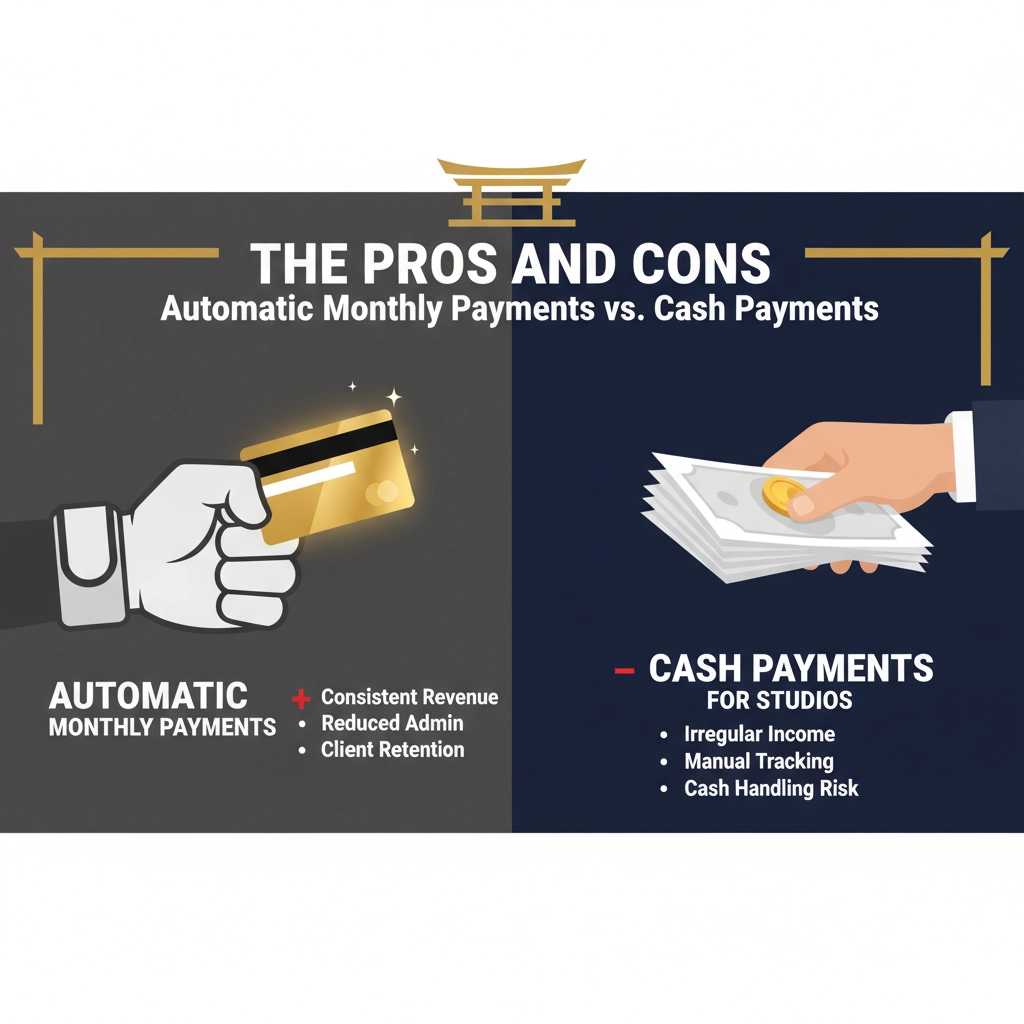
Running a martial arts studio means juggling countless responsibilities: from teaching techniques and managing belt promotions to handling the business side of things. One of the biggest decisions you’ll face as a dojo owner is how to collect payments from your students. Should you go with automatic monthly payments, or stick with the traditional cash-and-check approach?
Both methods have their place in martial arts studios, but understanding their pros and cons will help you make the right choice for your dojo’s unique situation.
Automatic Monthly Payments: The Modern Approach
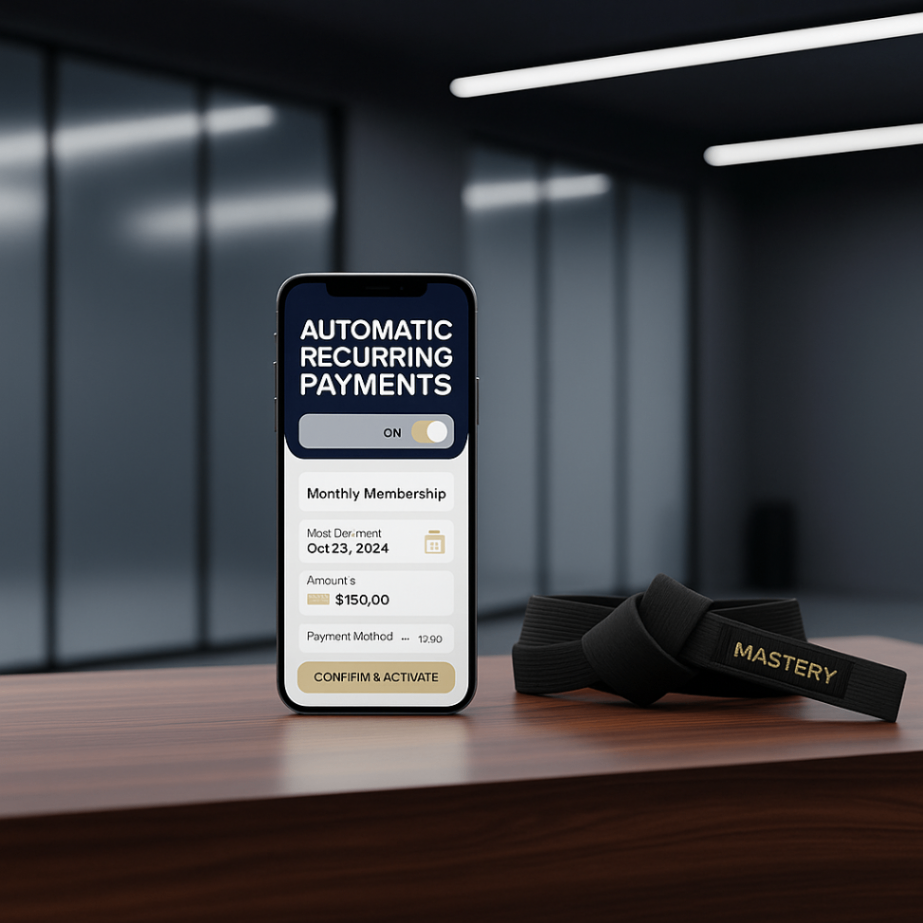
Automatic monthly payments have become the gold standard for most successful martial arts studios. Here’s why many dojo owners are making the switch: and what challenges you might face.
The Benefits of Going Automatic
Predictable Cash Flow Makes Planning Easier
When students pay automatically each month, you know exactly how much revenue to expect. This predictability is a game-changer for martial arts studio owners who need to plan for equipment purchases, tournament fees, or facility improvements. Instead of wondering whether you’ll have enough cash to cover next month’s rent, you can focus on growing your program.
Dramatically Reduces Administrative Time
Manual payment collection eats up hours that could be spent teaching or growing your dojo. With automatic payments, you eliminate the need to chase down late payments, process individual transactions, or spend time at the bank making deposits. Many studio owners report cutting their monthly bookkeeping from 20+ hours down to just a few hours.
Improves Student Retention
Here’s something interesting: students who pay automatically tend to stick around longer. When payment is seamless and automatic, students don’t face the monthly decision of whether to continue training. They’re more likely to push through temporary motivation dips and stay committed to their martial arts journey.
Reduces Late Payments and Awkward Conversations
Nobody enjoys asking students for overdue payments, especially when you’re trying to maintain a positive training environment. Automatic payments eliminate those uncomfortable conversations and ensure you get paid on time, every time.
Creates Professional Image
Modern payment systems signal to parents and adult students that your dojo operates professionally. This can be especially important when competing with other activities for students’ time and money.
The Challenges You Might Face
Initial Setup Complexity
Getting automatic payments up and running requires more work upfront. You need billing software, payment processing accounts, and written authorization from each student. DojoTrack’s all-in-one platform simplifies this process, but there’s still an initial learning curve.
Failed Payment Management
Credit cards expire, bank accounts close, and payments fail. When this happens, you need systems to retry payments, notify students, and temporarily suspend access if needed. This requires ongoing attention and clear policies.
Some Students Prefer Traditional Methods
Not every student is comfortable with automatic payments. Older students or families who prefer cash might resist the change initially. You’ll need patience and clear communication about the benefits.

Cash Payments: The Traditional Route
Despite the rise of digital payments, cash still has its place in martial arts studios. Let’s look at when cash payments work well and where they fall short.

Why Some Studios Stick with Cash
Immediate Money in Hand
When a new student pays their first month upfront in cash, that money is immediately available. There’s no waiting for payment processing or dealing with transaction fees. For studios with tight cash flow, this immediate access can be crucial.
Simple to Understand and Implement
Cash payments are straightforward. Student pays, you provide service. There are no complex billing systems to learn, no software subscriptions to manage, and no technical issues to troubleshoot. This simplicity appeals to many traditional martial arts instructors.
Appeals to Cash-Preferring Students
Some families genuinely prefer paying in cash. This might be due to cultural preferences, concerns about financial privacy, or simply wanting to maintain tight control over their monthly spending.
No Technology Dependencies
With cash payments, you’re never dealing with payment gateway outages, software glitches, or connectivity issues. Rain or shine, cash always works.
The Drawbacks of Cash-Only Operations
Unpredictable Revenue Stream
Cash payments create feast-or-famine scenarios. Some months, most students pay on time. Other months, you’re scrambling to collect payments while bills pile up. This unpredictability makes it hard to plan for growth or handle unexpected expenses.
Significant Time Investment
Collecting cash payments becomes increasingly time-consuming as your dojo grows. You’ll spend considerable time tracking who’s paid, following up on late payments, making bank deposits, and managing cash flow. Time that could be spent teaching or marketing your programs.
Higher Risk of Lost Revenue
When students pay monthly in cash, they face a decision point every month: continue training or spend money elsewhere. Without automatic payment, it’s easier for students to simply stop coming without officially canceling, leaving you unsure about their status.
Safety and Security Concerns
Keeping significant amounts of cash on premises creates security risks. You also need systems to prevent theft or loss, which adds administrative burden.
Professional Perception Issues
In today’s digital world, cash-only operations can seem outdated to potential students, especially parents researching martial arts programs for their children.
Limited Growth Potential
Cash-based studios often struggle to scale beyond a certain size. The administrative overhead becomes overwhelming, and the lack of predictable revenue makes it difficult to invest in growth initiatives.
Making the Right Choice for Your Dojo
The payment method you choose should align with your studio’s goals, student demographics, and operational capacity. Most successful martial arts studios today use automatic monthly payments as their primary method while still accepting cash for drop-in classes or special situations.
If you’re considering making the switch to automatic payments, platforms like DojoTrack can help streamline the transition with features specifically designed for martial arts studios. The platform handles everything from payment processing to student management, letting you focus on what you do best: teaching martial arts.

Remember, the best payment system is the one that works consistently for both you and your students. Whether you choose automatic payments, cash, or a combination of both, the key is maintaining clear policies and open communication with your martial arts community.
The choice between automatic monthly payments and cash isn’t just about money: it’s about creating the right foundation for your dojo’s long-term success. Take time to evaluate what works best for your unique situation, and don’t be afraid to evolve your approach as your studio grows.